What Is Closed Captioning? Definition, Types, and Use
Summary
Closed captioning is a toggleable text track that covers dialogue, sound effects, speaker labels, and non-verbal audio cues. Unlike subtitles, it is designed for viewers who cannot hear the audio, not just those who cannot understand the language. The text lives in a separate file (SRT, VTT, or SCC) that a video player reads in sync with the audio. AI tools generate the timed cues in minutes. A short review pass is what turns that raw output into captions that actually hold up on screen.
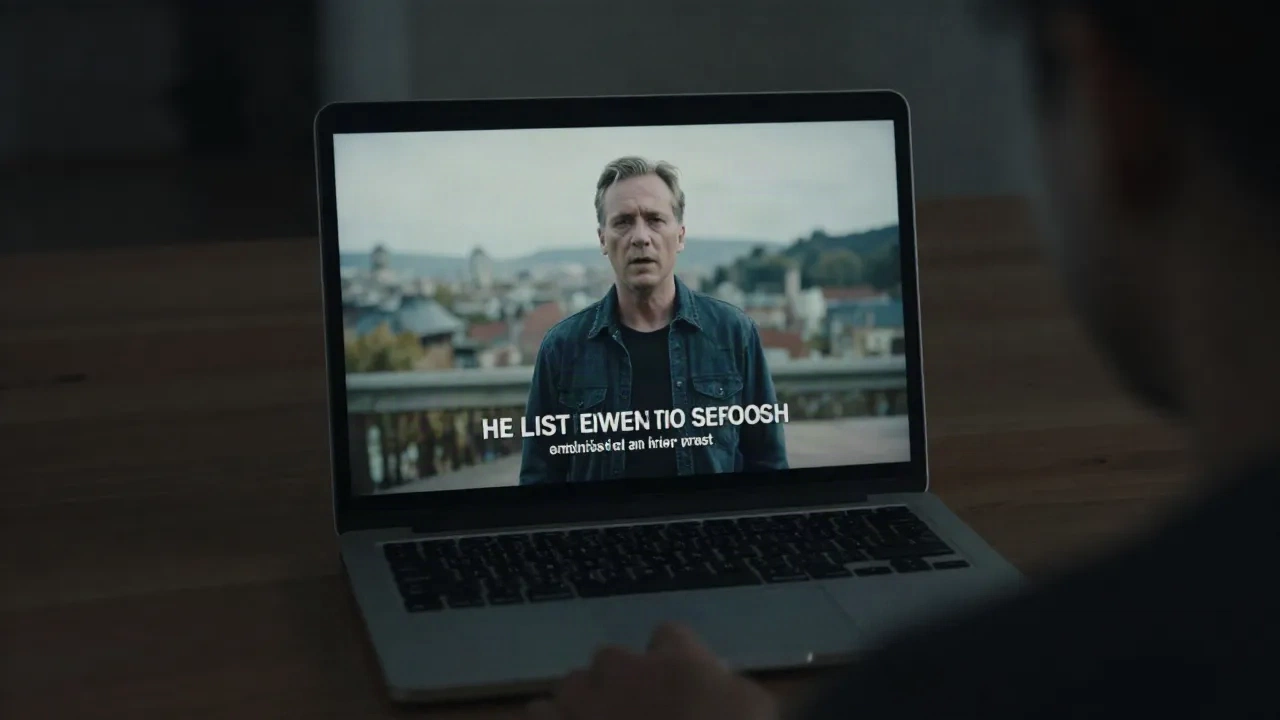
What is closed captioning? A toggleable text track attached to a video that shows dialogue, sound effects, speaker cues, and other audio details as on-screen text. The captions live in a separate file that a video player reads in sync with the audio. Switch them off and the video looks identical. Switch them on and every audio moment becomes readable text. The format for that file is usually SRT, VTT, or SCC, depending on where the video is published. The CC button controls visibility. What that button reveals depends entirely on how the captions were built. Understanding that distinction matters whether you are publishing for accessibility compliance, for audiences watching in silence, or simply trying to understand what the CC icon on your player actually does.
The "closed" part: what it means you can turn it off
Closed means the captions are hidden until the viewer decides to show them. The text is not baked into the image. It sits in a separate data track that video software reads and overlays on demand.
Press the CC button on a remote or click the caption icon in a player and the captions appear. Press it again and they disappear. The video file itself does not change.
This is the core technical distinction from open captions. Open captions are rendered permanently into the video frame. They cannot be removed. Closed captions travel as a companion file. That toggleability is what defines the word closed in closed captioning.
Closed captions vs subtitles: a content difference, not a format one
The words captions and subtitles are used interchangeably in everyday speech, but they describe different things at the level of what they contain.
Subtitles assume the viewer can hear. They carry the dialogue, sometimes translated into another language, and nothing else. If a door slams offscreen, subtitles do not mention it.
Closed captions assume the viewer cannot hear. They carry the dialogue, but also sound effect descriptions like [DOOR SLAMS], music labels like [UPBEAT JAZZ], and speaker identifications like [ANNA] when the frame alone does not make it obvious who is speaking. The aim is a complete written equivalent of the audio track.
One practical consequence: if you are translating a video for a foreign audience, you likely want subtitles (dialogue only, in the target language). If you are making your video accessible to deaf or hard-of-hearing viewers who share your language, you want closed captions (dialogue plus every audio detail). A translated subtitle track and an accessibility caption track are different deliverables, even if they use the same SRT file format. Both can be delivered as a toggleable text file or burned into the picture. The open/closed distinction is about whether you can turn them off. The captions/subtitles distinction is about what they contain.
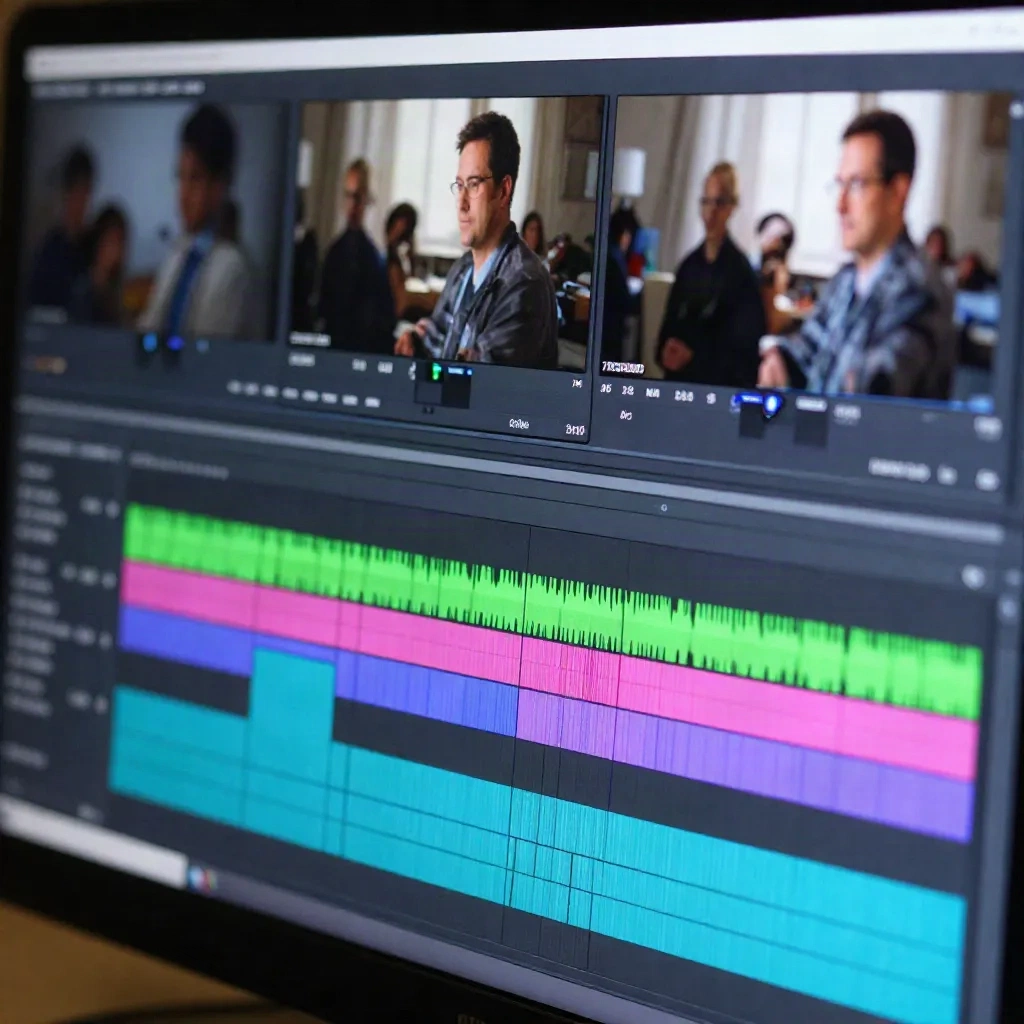
What goes inside a closed caption: beyond the dialogue
Dialogue is the obvious component. A complete closed caption track also includes the following.
Sound effects: [PHONE RINGING], [THUNDER], [APPLAUSE]. Anything that carries meaning for the scene and cannot be inferred from the picture alone.
Music cues: [TENSE MUSIC], [UPBEAT JAZZ], [MUSIC FADES]. Not every note, but enough to tell the viewer whether a scene carries musical underscoring and what kind.
Speaker identification: When two or more people speak and the frame does not make it clear who is talking, a label like [MARK] or [INTERVIEWER] removes the ambiguity.
Non-verbal sounds: Laughter, crying, a sharp intake of breath. The emotional sounds an actor performs that dialogue transcription misses entirely.
The underlying principle is that a deaf or hard-of-hearing viewer reading the captions should have access to the same emotional and contextual information that a hearing viewer gets from the audio. That is a higher bar than writing down what is said, and it is the bar that separates captions from subtitles at the content level.
Closed captions vs open captions: burn-in or separate track
Open captions are rendered directly into the video pixels. They cannot be removed. Every viewer who watches that file sees the text, whether they want to or not.
Closed captions are a separate data file. Load the file alongside the video and the player shows the text. Delete the file and the video plays without any text on screen.
For social platforms that autoplay without sound, open captions have become the practical default. A video that carries its own burned-in text does not depend on the viewer finding a caption toggle or on the platform supporting one. Research from Verizon Media found that 69% of viewers watch video with the sound off in public places. Open captions reach all of them automatically.
For streaming, broadcast, educational platforms, and anywhere viewers prefer to customize text size, color, or background contrast, closed captions give that control. The viewer can adjust the font size, pick a high-contrast background, or switch the captions off entirely. On platforms that support it, closed captions can also be searched and indexed, which open captions cannot.
SRT, VTT, SCC: the files that carry the captions
Closed captions live outside the video in a text file. Three formats cover most use cases.
SRT (SubRip Subtitle) is the most widely supported caption format. Each caption block has a sequence number, a timing line showing start and end, and the caption text. SRT is plain text, lightweight, and supported by YouTube, Vimeo, most desktop players, and every AI subtitle tool worth using. It does not support text formatting or custom positioning.
VTT (WebVTT) is the native format for HTML5 video players. It resembles SRT but uses dots instead of commas in the timing, and it supports styling hints for positioning and color. For web video and streaming platforms, VTT is often the better choice over SRT.
SCC (Scenarist Closed Caption) is the legacy format for North American broadcast television. It encodes caption data as hexadecimal values tied to the CEA-608 broadcast standard. If you are delivering to a television broadcaster or a cable platform, SCC is still what they require.
For most creators publishing online, SRT or VTT covers every platform. Export from your captioning tool, attach the file to your upload, and the platform reads it automatically.
Reading speed and line breaks: the numbers a good caption respects
A caption that flashes for 0.3 seconds cannot be read. A caption that lingers for 12 seconds is no longer in sync with what is happening on screen. Readable closed captions stay within a window defined by two metrics.
Characters per second (cps): The standard range for comfortable reading is 14 to 17 cps for general audiences. For children's content or low-literacy contexts, 10 to 12 cps. Broadcast standards in the US and UK reference 17 cps as a soft ceiling. Above that threshold, captions start to feel rushed.
Minimum display time: A caption should appear for at least 1.5 seconds even if the line is short. Below that threshold, viewers register the text appearing but cannot read it before it vanishes.
Line length: 32 to 42 characters per line is the conventional range for video captions. Longer lines crowd the frame and wrap awkwardly on smaller screens.
Line breaks: Cut at a grammatical boundary, not in the middle of a phrase. "I told him / I would not" reads naturally. "I told / him I would not" fractures the idea mid-thought. This is the rule that auto-generated captions violate most often. It is also the one that makes hand-edited captions feel professional even when the underlying transcription was accurate.
Where closed captioning is legally required
In the United States, the FCC requires closed captions on all video programming that aired on television since 1998 and on all video content repurposed for online distribution. The ADA and its updates extend the expectation to online video: businesses, schools, and public institutions publishing video for public access are expected to caption it.
WCAG 2.1 Success Criterion 1.2.2 requires captions for all pre-recorded synchronized media at the AA compliance level. Governments, universities, and large employers in the US, UK, EU, and Canada reference WCAG AA as the baseline. A video published without captions fails that standard.
The UK Equality Act, EU Accessibility Act, and Australian Broadcasting Standards have parallel requirements across broadcast and digital distribution. The specifics vary by jurisdiction, but the direction is consistent: captions are the baseline expected of any published video, not an optional add-on.
How AI generates closed captions today
AI transcription has changed the production workflow significantly. A model that generates a timed transcript from audio in under a minute has already done the heaviest part of the captioning work.
What AI gets reliably right: timing (generally within one to two frames of actual speech), speaker turns in clean recordings, and the dialogue itself in standard accents. The transcript is usually accurate enough that a short review pass finishes the job, not a full retype.
What still needs a human pass: sound effect labels and music cues are not generated automatically by most transcription models. Lines that break mid-phrase rather than at grammatical boundaries are common AI outputs that read poorly on screen. Proper nouns, acronyms, and technical vocabulary remain the soft spots in any model.
The practical workflow: let the AI produce the timed cues, then spend 10 to 15 minutes in a caption editor reviewing what it got wrong. The AI handles the timing and the transcription. The review pass is what turns a raw transcript into captions that actually hold up on screen.
Test it on a real video, not a paragraph. That is where the differences between tools become visible, and where you find out whether the line breaks match the rhythm of the speech.